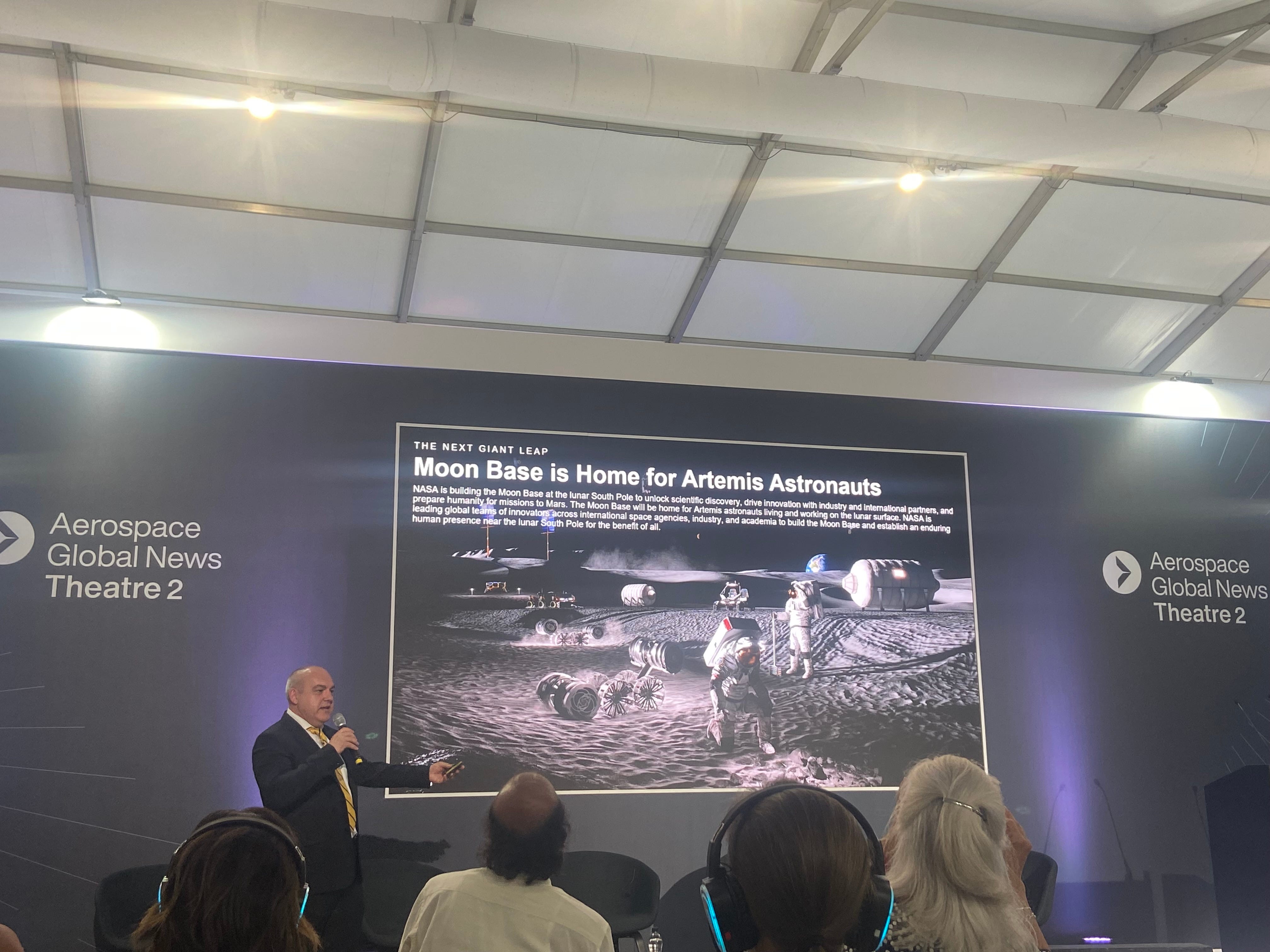
Image from the airshow
Last week I joined the Farnborough Aerospace Conference to assess deeptech innovation and investment opportunities across the aerospace and space technology sectors.
My current focus is looking for projects within Deeptech so it seemed reasonable to consider aerospace as an area of focus.
My impressions of the sector are one which is deeply conservative, despite much of the progress with autonomous flight and drone tech. I was surprised to see so many old technologies still in active use from Fortran and Ade Code to Ardupilot. Even supposedly cutting edge new AI technologies for autonomous drones still dependent on these technologies.
The talent problem holding aerospace back
Skills were also a topic, with the usual conservative focus on “training more young people” which takes years, never solves the real issue as the fallout rate from training is too high across all science and tech sectors. The only thing which ever moves the needle is bringing people in from adjacent skill areas and pushing the door open to outsiders. Industries that recognise that and promote foreigners and pay well, see the most aggressive growth and returns.
Space technology was well represented, but still feels very niche. It is the area with the most potential. Not least because the sector is more open to people with transferable skills. Most of the Spacetech workforce has some background in research, aerospace or associated heavy industry.
Space Technology: The Deeptech sector with the most investment potential
Take always from the presentations were how fragile our reliance on GPS technology especially in aerospace. This is mostly a systemic issue not one of innovation, since alternatives exist.
How space weather events not only currently bring dozens of satellites crashing to earth but how it could also impact the rail network (amongst other things)as well. Network operators are alarmingly disinterested in quite a serious risk to their signalling systems.
It seems NASA is building a permanent base on the moon. This is really an ambitious and ground breaking project and is already driving a lot of innovation. Multiple international space agencies and private companies are contributing with automotive companies like Toyota with their initial designs for pressurised moon vehicles, under part of the phase 2 program supported by the Japanese Space Program.
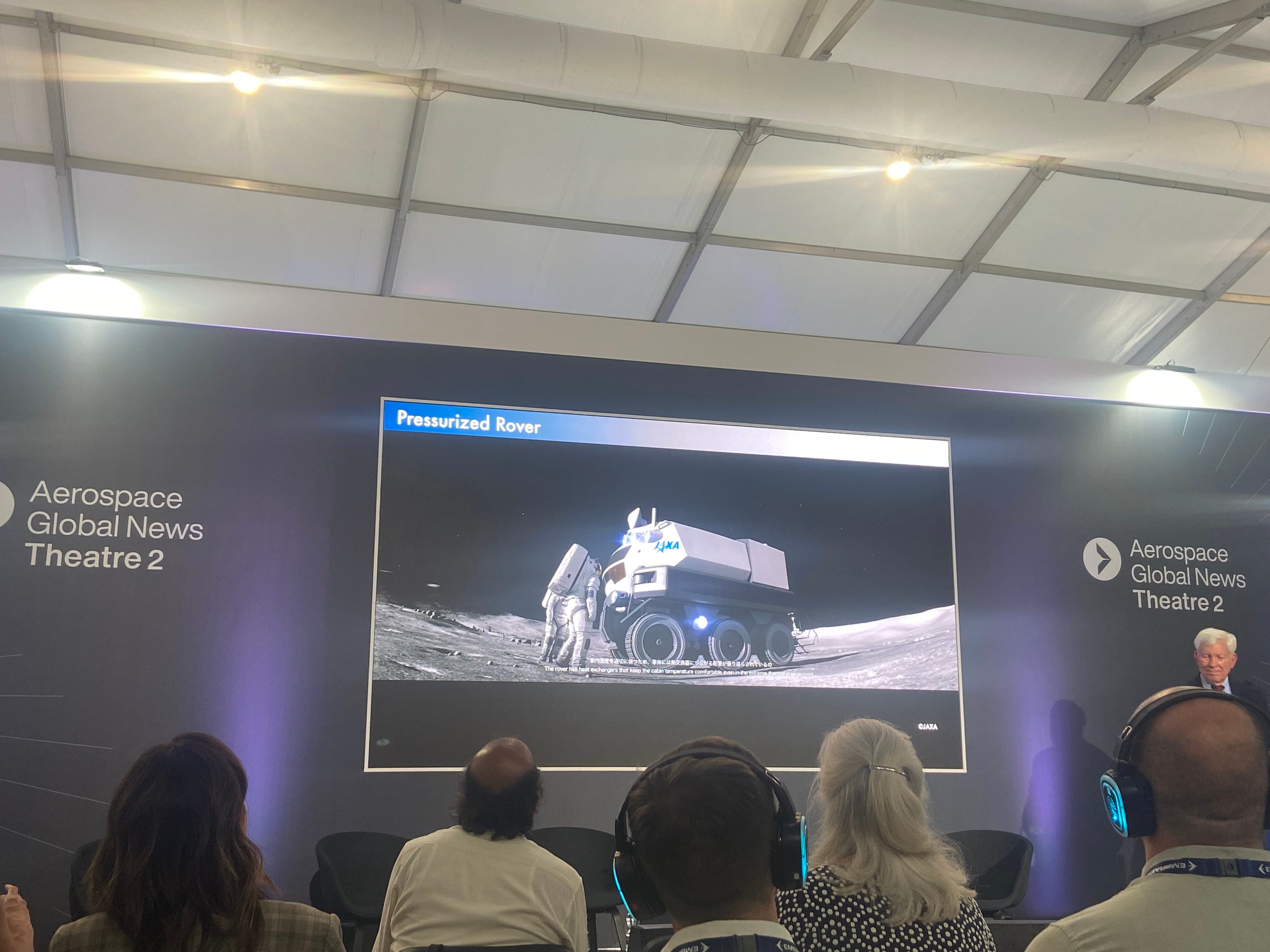
Image is of the initial concepts for pressurised moon vehicles, supported by JAXA(Japanese Aerospace Exploration Agency) and Toyota.
Worth keeping an eye on NASA’s procurement strategy. Much of this is so cutting edge it simply doesn’t exist yet, and their procurement program is both open to new and established firms.
Image below is of Moonbase Program Manager Carlos Garcia Galan presenting on the approach to Moon Base development. Its a shame the presentation was timed with the start of the arial demonstrations outside. More people should have attended this, it is a generational opportunity.